
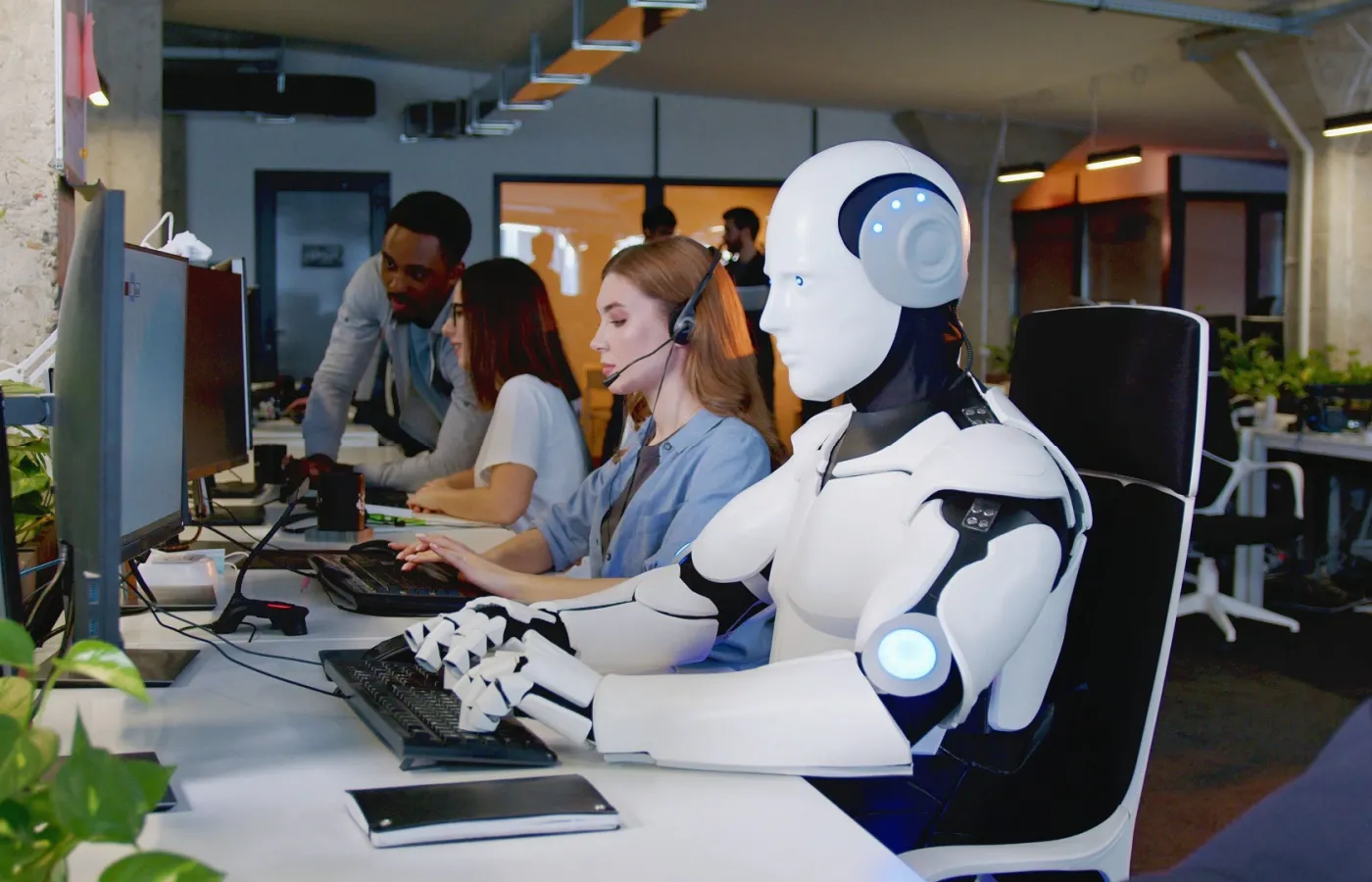
Fears of a “Jobpocalypse” — mass automation driven by artificial intelligence — are growing across U.S. workplaces. As companies increasingly plan to use AI to replace roles, millions of jobs face risk or transformation. This article explores how real that threat is, which professions are most exposed, how workers can prepare, and whether AI might also create new opportunities.
Why the “Jobpocalypse” Fear Is Gaining Steam
In 2025, mounting anxiety about AI-driven job losses is no longer confined to tech circles — it’s becoming a mainstream national concern. According to a SHRM survey, 23.2 million American jobs are already at least 50% automated or influenced by generative AI. (shrm.org) Meanwhile, reports suggest that up to 41% of U.S. employers plan to reduce their workforce because of AI. (cnbc.com)
This isn’t just speculation: breakthrough generative models and large‑language-model (LLM) systems are now showing they can complete complex tasks once thought to be uniquely human. The reality many fear — driven not by science fiction, but by real business incentives — is that automation may not simply displace tasks but entire roles. Hence the term “Jobpocalypse” is trending among workers, policymakers, and job‑market analysts alike.
How Many U.S. Jobs Could Actually Be Replaced or Transformed by AI?
Projections and Data Points
- 30% of U.S. jobs could be automated by 2030, while another 60% may undergo significant task-level disruption. (nu.edu)
- As many as 92 million global roles could be displaced by 2030, but 170 million new roles might emerge — yielding a net gain of 78 million jobs. (allaboutai.com)
- From SHRM’s 2025 survey: roughly 15.1% of U.S. jobs (about 23.2 million) involve roles where at least half the tasks are automated or governed by AI. (shrm.org)
- According to the World Economic Forum (WEF), AI could create more jobs than it eliminates, but the nature of work will shift toward technical or hybrid roles. (arstechnica.com)
These numbers paint a mixed but alarming picture: AI is likely to disrupt a broad swath of the workforce, from clerical and administrative work to more specialized white-collar roles.
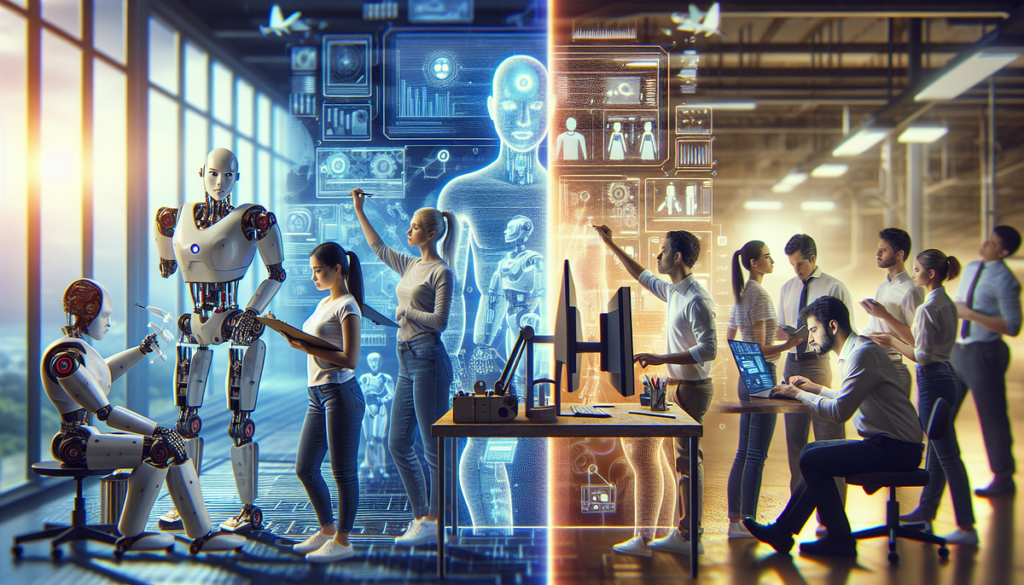
Which Jobs Are at Greatest Risk — and Which Could Be Safer?
High-Risk Professions
- Administrative & Office Support: Many administrative tasks could be heavily automated.
- Customer Service & Call Center Work: Chatbots and AI systems can handle high volumes of inquiries.
- Retail and Data Entry: Entry-level positions in retail and clerical work are especially vulnerable.
- Creatives & Knowledge Workers: AI is now capable of generating content, designs, and data analysis.
Jobs That Could Be More Resilient
- Healthcare, Education, and Human Services: Roles with high empathy or hands-on interaction.
- Skilled Trades: Manual labor roles are harder to automate fully.
- Human-AI Hybrid Roles: Jobs where humans supervise or interpret AI outputs.
Why Companies Are Leaning Into AI — and the Employer Logic
Key Drivers
- Cost Pressure: Reduces labor costs.
- Productivity Gains: AI handles data-heavy tasks faster and more accurately.
- Competitive Advantage: Early adoption can improve efficiency and innovation.
- Talent Shortages: AI compensates for labor gaps.
Employer Plans
- 48% of U.S. employers plan to use AI to reduce headcount or automate roles. (cnbc.com)
- 77% of firms intend to upskill their workforce to work alongside AI. (arstechnica.com)
Real-World Examples: Who’s Already Feeling the Impact
- Amazon: Plans to automate large portions of operations via robotics, potentially affecting hundreds of thousands of U.S. roles. (theverge.com)
- Microsoft Office Functions: AI tools like Bing Copilot handle drafting, research, translation, and summarizing tasks. (investopedia.com)
- SHRM 2025 Data: Over 12 million U.S. jobs already use generative AI for 50% or more of their tasks. (shrm.org)
What Does This Mean for the Future of Work?
- Role Redefinitions: Many jobs won’t disappear, they’ll evolve.
- Mass Reskilling: Education and training must scale to meet AI demands.
- Policy Intervention: Safety nets like UBI, retraining grants, or robot taxes may emerge.
- Workforce Polarization: Automation could widen inequality.
- Human Skills Premium: Creativity, empathy, judgment, and resilience become critical.
How Workers Can Prepare (Practical Steps)
- Skill Up: Focus on digital literacy, AI literacy, and emotional intelligence.
- Seek AI-Augmented Roles: Find roles where humans and AI collaborate.
- Upskill Online: Platforms like Coursera and edX can help.
- Network: Join professional groups around tech and future-of-work topics.
- Engage in Policy Dialogue: Advocate for reskilling programs and worker protections.
10 Trending FAQs About the AI-Driven “Jobpocalypse”
- Is the “Jobpocalypse” hype or real?
It’s real but often means job transformation rather than complete elimination. - How many U.S. jobs could AI replace?
Up to 30% strongly automated, 60% partially disrupted. - Which jobs are most at risk?
Administrative, data entry, customer service, and some white-collar roles. - Could AI create more jobs than it destroys?
Yes — WEF predicts 170 million new roles vs. 92 million displaced. - Are companies already replacing workers with AI?
Many are — with AI handling 50%+ of tasks in some roles. - Which skills are most valuable in an AI economy?
Digital literacy, resilience, collaboration, critical thinking, adaptability. - Is retraining effective?
Yes, but it needs to be scaled and aligned with AI skill demands. - Will lower-skilled workers be hardest hit?
Often, yes — especially those in routine or repetitive roles. - What policy solutions exist?
UBI, robot taxes, reskilling grants, and labor protections are being discussed. - Is any job AI can’t replace?
High-empathy, human-connection roles like therapists, teachers, and some healthcare jobs.
Final Thoughts: Are We Facing a Jobpocalypse — or a Job Revolution?

The specter of a “Jobpocalypse” is real. AI will reshape the workforce dramatically. But with planning, investment, and policy, it doesn’t have to be catastrophic.
- Workers: Reskill for future-proof roles.
- Companies: Embrace AI collaboration rather than competition.
- Policymakers: Protect and elevate people, not just cut costs.
The coming era isn’t just about lost jobs — it’s about jobs being reborn. Will AI define us, or will we define AI’s role in our lives.